
Guides
What Is Cold-Pressed Juice? Cold-Pressed vs Regular
Cold-pressed, centrifugal, pasteurized, HPP: what each word on a juice bottle means, and why fresh cold-pressed juice only keeps a few days.
4 min read
"Cold-pressed" is on a lot of bottles now, from Atlanta juice bars to the grocery store cooler, and it does not always mean the same thing. Some cold-pressed juice was pressed yesterday and keeps a few days. Some was pressed weeks ago and keeps for weeks more. Here is what the words on the label actually tell you.
What cold-pressed means
Cold-pressed juice is made by grinding fruit and vegetables into a pulp and then squeezing that pulp under pressure until the juice runs out. "Cold" means no heat is used to make it. The pulp and fiber stay behind, and what you drink is the liquid.
The usual alternative, in a juice bar or a kitchen, is a centrifugal juicer: a fast-spinning blade shreds the produce and flings the juice out through a mesh. It is quicker and cheaper, but it whips a lot of air into the juice, so it foams, separates sooner and is best drunk on the spot.
Pressing is slower and takes more produce per bottle. In return the juice is smoother and denser, with less foam, and it holds up better in the fridge for the few days it keeps.
Cold-pressed vs regular juice from the store
Most juice on a supermarket shelf differs from fresh cold-pressed juice in two ways: how it was made safe to keep, and whether water was taken out and put back.
Pasteurized
Most juice sold in the United States is pasteurized: heated to kill harmful bacteria. That is what lets a carton sit on a shelf or in the fridge for weeks. Heat changes the flavor, which is part of why boxed orange juice tastes nothing like a fresh orange.
HPP (high pressure processing)
Many bottled cold-pressed juices in grocery stores are pressed cold and then treated with very high water pressure, called HPP, which kills bacteria without heat. The juice is still legitimately cold-pressed, and it tastes closer to fresh, but it keeps for weeks rather than days. If a cold-pressed bottle has a use-by date a month out, it has almost certainly been treated this way.
Raw and unpasteurized
Juice that is pressed and bottled with no treatment at all is raw. It tastes the most like the produce it came from, and it keeps the shortest time. The FDA requires packaged juice that has not been pasteurized or otherwise treated to carry a warning on the label, because untreated juice can carry bacteria that are dangerous for children, older adults, pregnant women and people with weakened immune systems.
From concentrate
"From concentrate" means water was removed from the juice, usually to make it cheaper to store and ship, and added back before bottling. It has nothing to do with how the juice was pressed. Fresh cold-pressed juice is never from concentrate.
What ours is
From the Vine juice is cold-pressed, raw and unpasteurized. We press one batch a week, only what has been ordered, and hand it over on Saturday across metro Atlanta. It keeps about 5 days in the fridge from pressing, which is the honest trade for juice that has not been heated or pressure-treated. Our guide to how long cold-pressed juice lasts covers storage and who should skip raw juice.
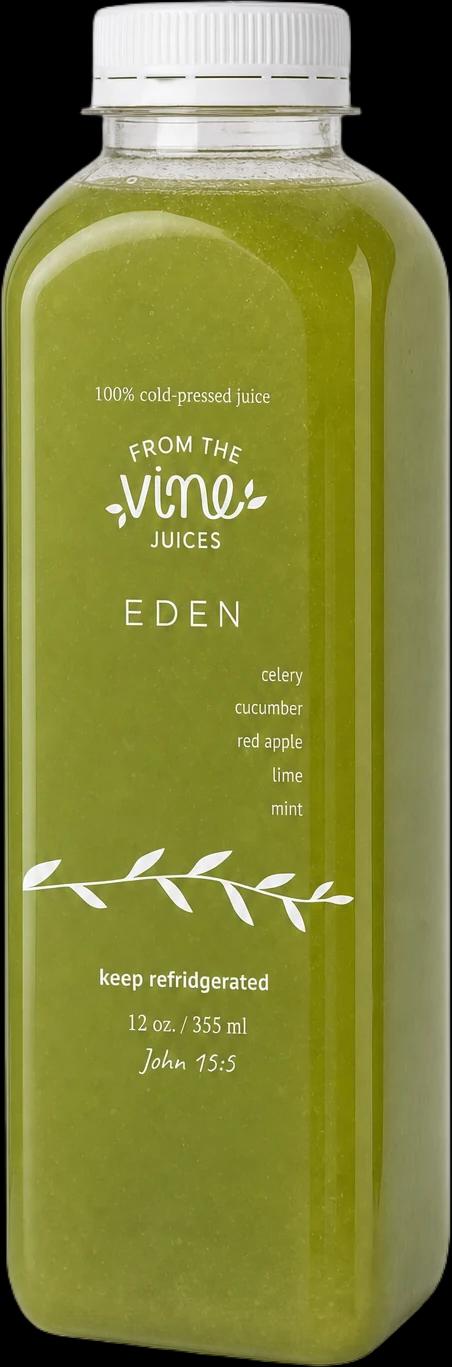
Eden
celery, cucumber, red apple, lime, mint
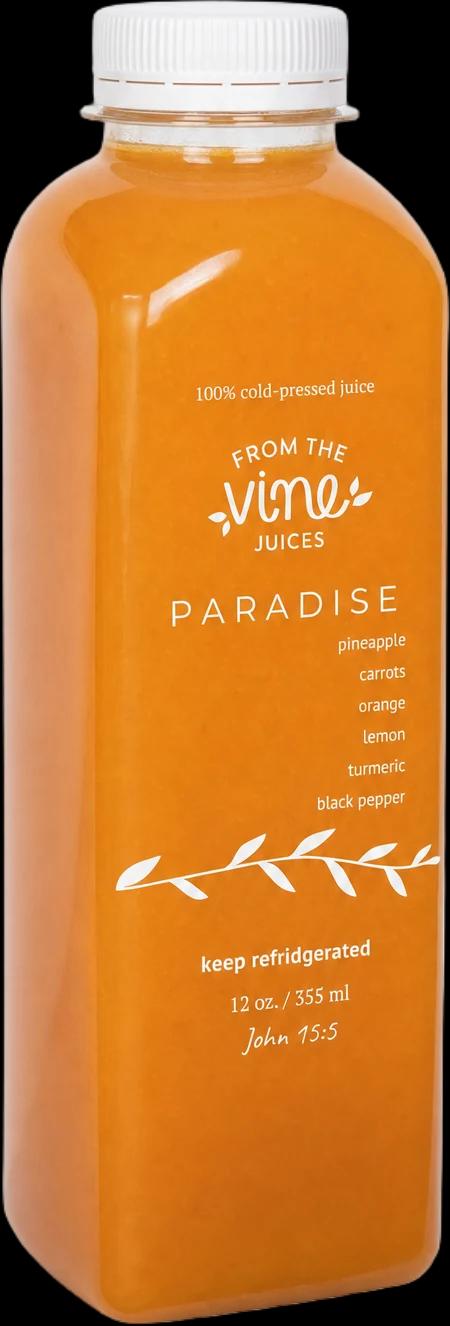
Paradise
pineapple, carrot, orange, lemon, turmeric, black pepper
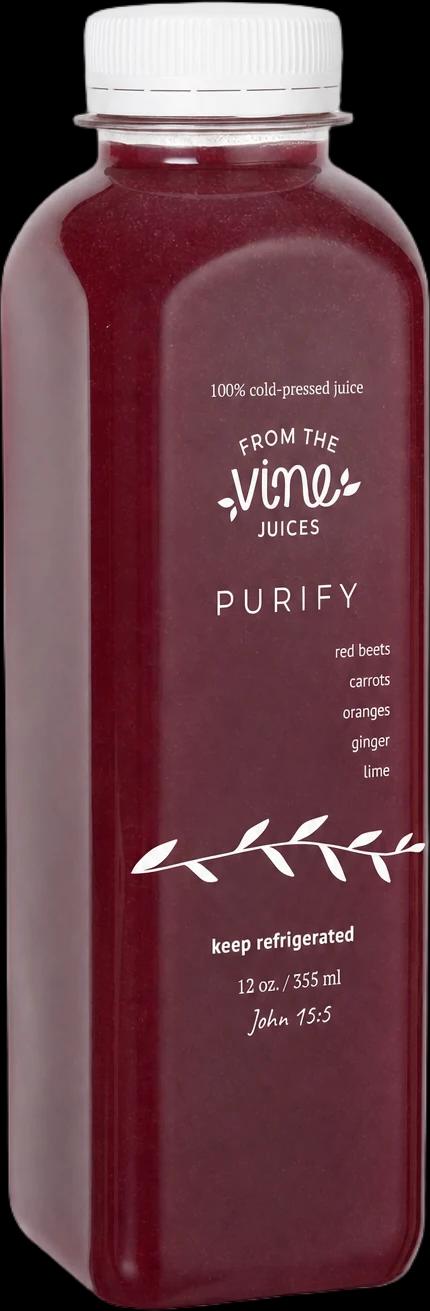
Purify
red beet, carrot, orange, ginger, lime
Is cold-pressed juice healthier?
It depends on what you compare it with. Next to a soda or a sweetened juice drink, a bottle of fresh vegetable and fruit juice is an easy win. Next to eating the whole fruit or vegetable, it is not a replacement: pressing leaves most of the fiber behind, and fiber is a big part of why whole produce fills you up and keeps sugar from hitting all at once.
Where juice earns its place is in getting more produce into a real week. According to the CDC, only about 1 in 8 American adults eat the recommended amount of fruit, and only 1 in 10 eat enough vegetables. A bottle with celery, cucumber, beet or cabbage in it is a lot of vegetables you probably were not going to eat at lunch.
That is also why the ratio matters. A juice that is mostly apple and pineapple is closer to a treat. One that leads with vegetables and uses fruit to round it out is a different drink. When you build your juices with us, you can tell us you want it low in sugar, and we build the week that way. If you want to know how the rest of that works, read how we build your week.
How to read a juice label in ten seconds
- A warning about pasteurization means the juice is raw. Fresh, short-lived, and not for everyone.
- A use-by date weeks away on a cold-pressed bottle usually means HPP.
- "From concentrate" means water was taken out and put back.
- The ingredient order tells you whether it is a vegetable juice with some fruit, or a fruit juice with a little green for color.
Sources
- U.S. Food and Drug Administration. What You Need to Know About Juice Safety.
- Lee SH, Moore LV, Park S, et al. Adults Meeting Fruit and Vegetable Intake Recommendations, United States, 2019. CDC, Morbidity and Mortality Weekly Report, 2022.
This article is general information, not medical advice. Juice is food: it is not intended to diagnose, treat, cure or prevent any disease. If you are pregnant, take medication or are managing a health condition, talk with your doctor before changing what you eat or drink.